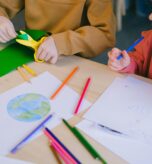

A child’s natural development is best supported through education that transforms innate potential into practical life skills. Educational institutions play a guiding role in this journey by offering structured, age-appropriate programs.
In early childhood education, learning experiences are organized around key developmental areas:
Motor (physical) development
Cognitive development
Language development
Social and emotional development
Self-care skills
Each area includes essential sub-skills that contribute to holistic growth. While supporting the whole child is vital, some abilities are especially critical for a child’s future well-being and success. Parents and educators share a fundamental responsibility: understanding these core skills, minimizing developmental risks, and providing the right support for healthy growth.
Developing Responsibility
A sense of responsibility is one of the most important life skills a child can develop. In everyday life, fulfilling responsibilities helps maintain order and strengthens self-confidence. Responsibility develops gradually and cannot be taught overnight. Children naturally tend to avoid responsibility, which is why two principles are essential: Assigning small, achievable tasks
Ensuring consistency
Tasks should match the child’s developmental capacity so responsibility is not associated with negative emotions. With consistent practice, responsibility becomes a habit. In preschool, this may begin with weekly tasks and gradually evolve into daily responsibilities in later years.
Emotional Self-Regulation
Managing negative emotions is challenging — even for adults. Yet emotional self-regulation is a cornerstone of emotional intelligence and healthy social relationships. This skill should be nurtured from early childhood with patience and time. Adults can support children by:
*Asking how they feel
*Talking calmly after emotions have settled
*Acknowledging and reinforcing moments of successful self-regulation
*Discussing strategies for handling difficult emotions
With regular and patient guidance, children make meaningful progress in understanding and managing their emotions.
Seeing and Building Connections
Intelligence can be described as the ability to recognize relationships and connections. This skill underpins reasoning, problem-solving, and creative thinking across all learning areas. Schools should encourage children to make connections between ideas, topics, and experiences from their own perspectives. Children who can form multidimensional and creative links often show stronger academic performance. At home, this skill can be strengthened through everyday conversations — while watching a show, reflecting on daily experiences, or discussing stories. Asking questions such as:
“What do you think?”
“Why do you think this happened?”
“How might these two things be related?”
helps children deepen their thinking and understanding.
Learning to Wait
Research shows that children who can delay gratification often achieve greater long-term success. From around the age of four, impulse control begins to develop, but it requires gentle guidance. While reasonable needs should be met, children must also learn to wait. Simple, everyday examples include:
“You can have this after you eat your spinach.”
“You can play this game later.”
“We’ll go to the park tomorrow instead of today.”
“You can buy it after saving your money.”
These practices help children develop self-control and understand that patience is part of achieving goals.
Making Confident Choices
A healthy sense of self is reflected in the ability to make decisions independently. Difficulty making choices, relying constantly on others, or struggling to stand by decisions may indicate that this skill is still developing. Children should be encouraged to make choices from an early age. Asking their opinions, offering appropriate options, and allowing them to express their ideas freely strengthens autonomy and self-confidence.
Questions such as:
“What would you like to do?”
“What’s your plan?”
“What’s your idea or suggestion?”
empower children to trust their own judgment.
Building a Strong Foundation for the Future
There are many essential skills that support a child’s development, but these core abilities form the foundation of a balanced and resilient future. When parents and educators work together, children grow into confident, capable, and emotionally resilient individuals — ready to navigate life with curiosity, responsibility, and self-belief.
Source: Finnish Education System Institute (FESIN), Monthly Bulletin 2025